
2026-08-12
Russia experiences long winters, heavy snowfall, and extended periods of extremely low temperatures. During winter operation, photovoltaic power plants are often affected by snow accumulation, low-temperature performance variations, and reduced module efficiency, which can significantly impact annual energy production and project revenue.
A scientific and standardized winter operation and maintenance (O&M) strategy is essential for ensuring the safe operation of solar power plants in Russia, improving winter power generation performance, and maximizing the overall investment return of PV projects.
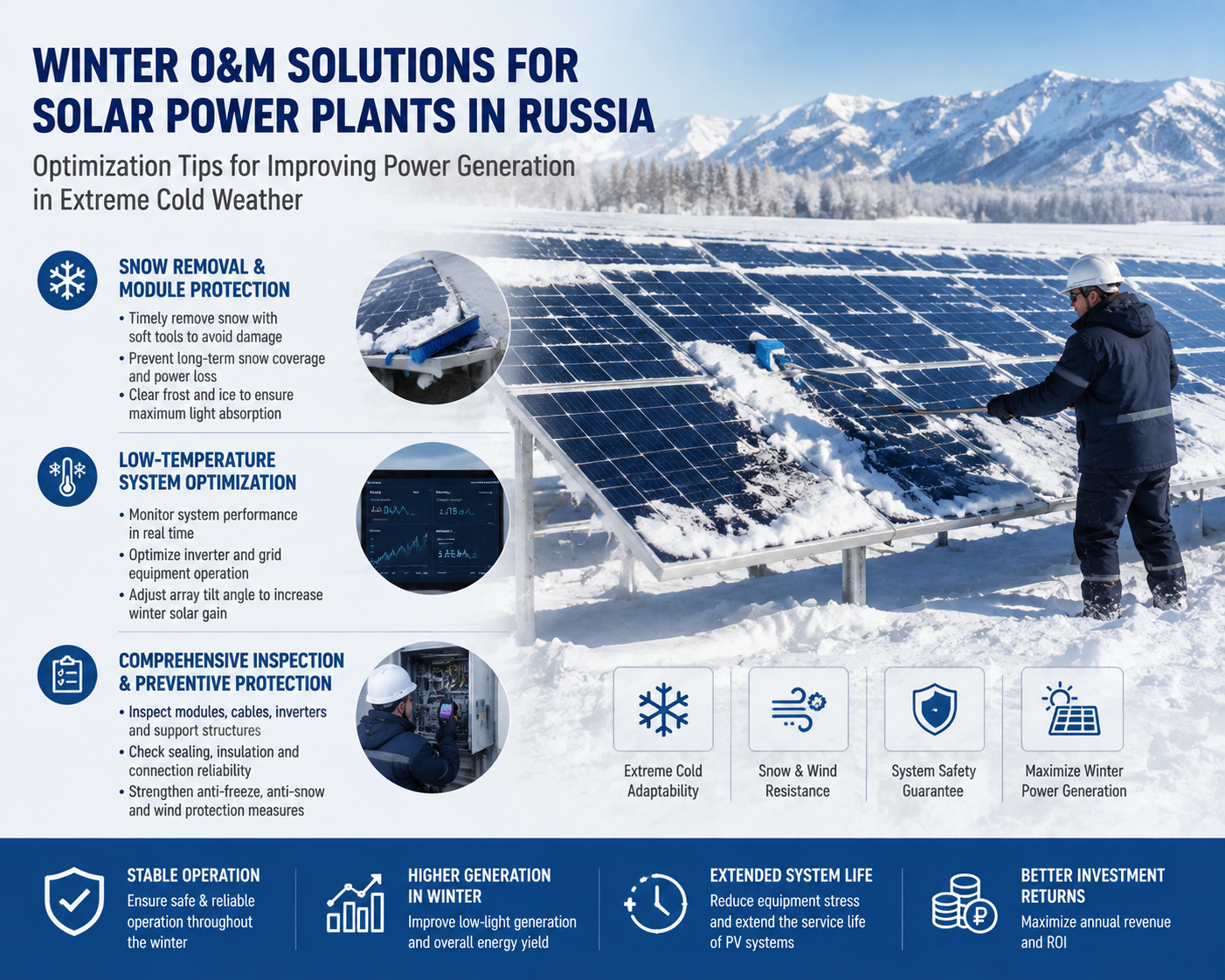
Snow accumulation on photovoltaic modules is one of the main challenges during Russian winters. Long-term snow coverage blocks sunlight absorption and may significantly reduce power output or even cause temporary shutdown of the PV system.
For regions with frequent snowfall, flexible and non-destructive snow removal methods should be adopted to prevent damage to module surfaces. Hard tools or improper cleaning methods may scratch the glass surface or cause micro-cracks, reducing module reliability and service life.
Regular inspection of frost and ice accumulation on module surfaces is also necessary. Timely removal of obstacles helps maximize solar radiation absorption and maintain stable power generation performance under weak winter sunlight conditions.
Under extreme cold conditions, the electrical characteristics of photovoltaic modules may change, while inverters and grid connection equipment may experience slow startup, power fluctuations, or abnormal operating conditions.
During winter O&M, operators should continuously monitor key system parameters, optimize equipment operation settings, and adjust control strategies according to low-temperature generation characteristics.
At the same time, based on seasonal changes in solar altitude angles, adjusting the tilt angle of PV arrays can improve solar radiation reception and increase winter energy yield.
Through professional system optimization, operators can reduce equipment stress, minimize unexpected shutdown risks, and improve the overall efficiency of solar power plants.
In addition to routine cleaning and system parameter adjustments, comprehensive winter inspections should be carried out before and during the cold season.
Key inspection areas include:
Preventive measures against freezing, heavy snow, and strong winds can effectively reduce winter equipment failures and ensure stable operation throughout the year.
A professional winter maintenance strategy not only extends the service life of photovoltaic systems but also helps maintain stable peak generation performance during spring and summer seasons, improving the long-term economic benefits of solar projects.
To address the challenges of winter operation in Russian photovoltaic projects, our company provides comprehensive technical guidance for extreme cold regions, including PV plant operation optimization solutions, system adaptation recommendations, and efficiency improvement strategies.
We support large-scale ground-mounted solar plants and distributed PV projects in Russia to safely operate through harsh winters, maximize winter generation potential, and achieve stable and efficient annual energy production.